 RailBridge AI
Merchant Operating System for AI Agent Payments
Accept cross-chain USDC from agents and users, then manage settlement and payouts in one control plane for business and developer teams.












Why Merchant Teams Get Stuck
Growth in onchain payments usually creates scattered balances, manual reconciliation, and operational risk for finance and ops.

Revenue Is Fragmented
Payments land across multiple chains and addresses, making it hard to maintain a single cash position.

Reconciliation Is Manual
Teams piece together explorer data, bridge events, and internal logs before they can trust reporting.

Operations Don’t Scale
Payout execution, controls, and auditability become fragile when payment infrastructure is stitched together.
Merchant OS, Powered by RailBridge
One operational layer from payment acceptance to settlement visibility and payout execution.
Customers and agents pay through x402
Your paid routes stay simple while payers use supported networks they already prefer.
RailBridge coordinates routing and settlement
The facilitator handles cross-chain movement and settlement lifecycle events behind the scenes.
Merchant OS keeps finance and ops in control
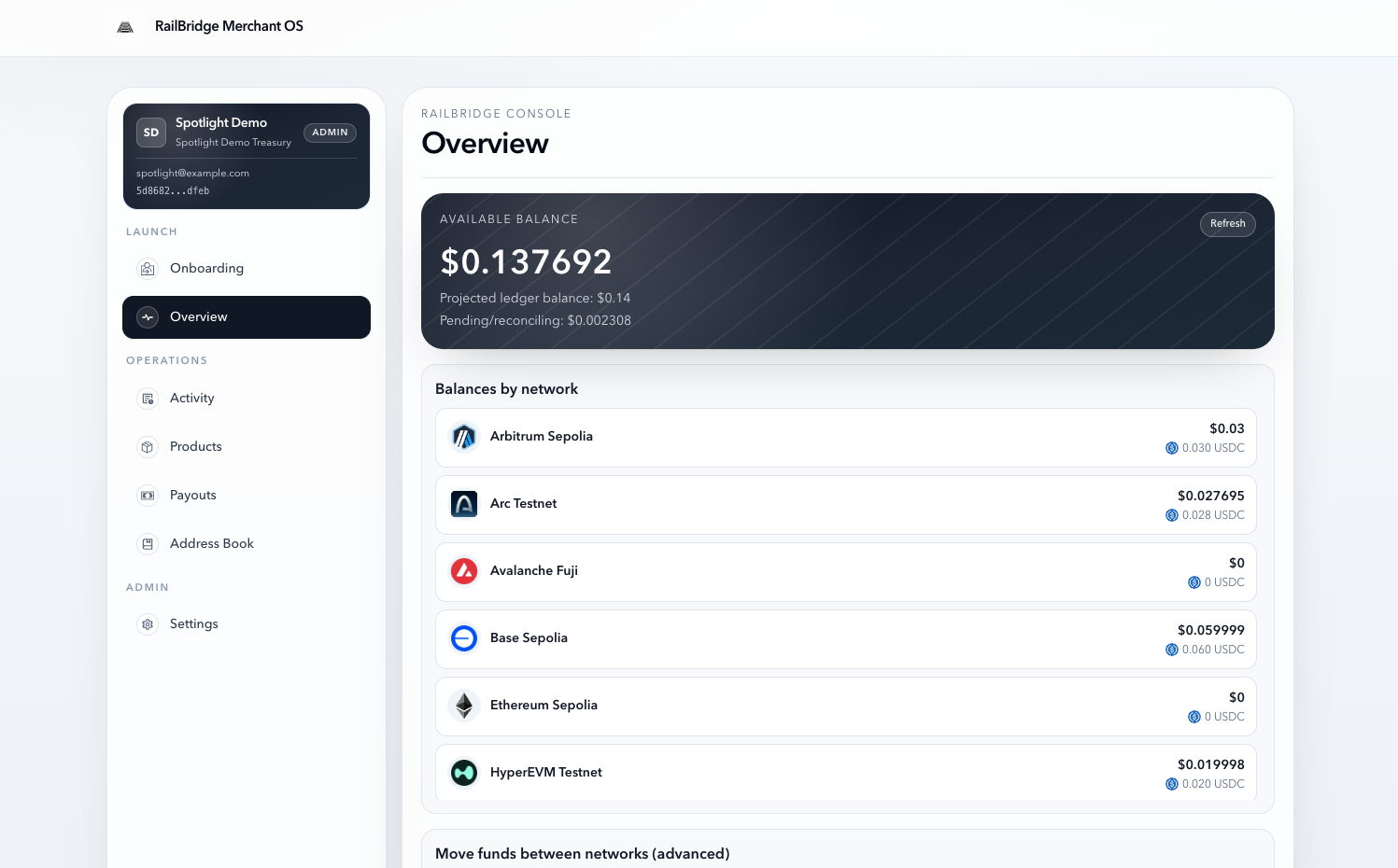
Track balances, settlements, policies, and payouts from one operational control plane.
What You Get In Railbridge Merchant OS


Who This Is For
RailBridge is built for teams that need stablecoin revenue operations to be reliable, auditable, and easy to run.
API And SaaS Businesses
Monetize paid routes with x402 while keeping finance operations in one Merchant OS control plane.
AI Agent Platforms
Support agent payments without forcing every customer into one chain or one wallet ecosystem.
Marketplace And Infra Teams
Consolidate multi-chain payment flow into clear settlement timelines and payout workflows.
Frequently Asked Questions
Everything you need to know about Merchant OS and RailBridge operations. Can't find an answer? Chat with our team.
Merchant OS provides one control plane for products, balances, settlement timeline, payout operations, and API keys so teams do not have to operate chain-specific backoffice workflows.
Run Your Payment Operations in Merchant OS
Start with testnet, prove your flow, then scale with stronger controls.